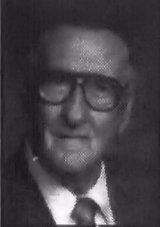
 Bishop Pendergrass was born September 24, 1900, in Florence, South
Carolina. He was one offour children born to Edward J., Sr. and Eula Ethel
(Smith) Pendergrass. The Pendergrass fami ly attended Central Methodist
Church in Florence, SC where Edward J., Sr. had been the Sunday School
Superintendent and served on the board of stewards for many years.
Bishop Pendergrass graduated from Florence High School and enrolled
in the University of North Carolina. He left without graduating and returned
to Florence, SC to pursue a business career. Pendergrass received his
calling after he had attended a prayer service one evening and decided to give
his life to the ministry.
In 1925 Pendergrass left Florence and attended seminary at Emory University. At Emory,
Pendergrass took courses covering the required work in the Conference Course of Study. After
leaving Emory Pendergrass took additional course work at Moody Bible Institute in Chicago and
Garrett School of Theology.
On June 26, 1929 Pendergrass married Miss Lois Mae Sheppard in Florence, SC. After getting
married the couple left Florence and went directly to Pendergrass's first assignment in Florida.
Pendergrass's assignments in Florida were as follows: Ft. White, 1930; High Springs, 1931;
Cross City, 1932; Ft. Pierce, 1934; Lakeland-College Heights, 1938; Tampa-Seminole Heights,
1939; Tallahassee-District Superintendent, 1943; Tampa-First, 1946; Orlando-First, 1952-1964.
The church history of First Church, Orlando mentions that, "a movement germinated and rapidly
grew within the church to have Rev. Pendergrass's name placed on the ballot for election to the
high office of bishop. A grateful and admiring congregation felt that he should receive the highest
recognition possible on account of his outstanding service to his church and Methodism. The hopes
and desires of the people were realized when he was elected to the episcopacy on the seventh
ballot of the Southeastern Jurisdictional Conference at Lake Junaluska, North Carolina, on July 10,
1964."
On July 24, 1964 Bishop Pendergrass left Orlando to begin his new assignment as bishop of
the Mississippi Conference. It was an assignment that many did not envy. Mississippi in the 1960's
was a place of racial unrest and turmoil. Bishop Pendergrass arrived in Mississippi just a few days
before the discovery of the bodies of three murdered civil rights workers. The civil right's workers
murders drew national attention to the racial problems that existed in Mississippi. Tension an(j fear
were prevalent among the people of Mississippi. Bishop Pendergrass did not ignore the racial
problems that affected the church. He worked diligently to unite the black and white conferences
of the state and helped with the transition of desegregation. Bishop Pendergrass did meet
opposition to his work on race relations. His granddaughter, Katherine Miller Burnett, who lived with
the Pendergrasses during this time recalled, "one night a group of men came to our home in a truck
and attempted to place a cross on the front lawn. My grandfather went out to meet them and was
able to persuade them to leave. I also remember we would find KKK literature thrown in the yard.
It was a difficult time for my grandfather."
Bishop Pendergrass's work in Mississippi bore fruit. The Methodist church survived the racial
unrest of the 1960's, and Bishop Pendergrass was able to help accomplish the merger of the
Central Jurisdictional Conferences with the white conferences in 1968.
Bishop Pendergrass retired from the Mississippi Conference in 1972, however, he did not stop
working. After retiring from the Mississippi Conference, Bishop Pendergrass accepted a position
as Special Assistant to the President of Florida Southern College in Lakeland, Florida. In this
position Bishop Pendergrass acted as a public relations agent and helped raise money for the
college from 1972 until he retired from the college in 1989. His efforts helped many students obtain
scholarships at Florida Southern College. He was a trustee emeritus of Florida Southern and the
college has the Pendergrass Chair of Religion named in his honor. After retiring, he and his wife
moved into the Lime Plaza, a retirement high-rise in downtown Lakeland. They both attended the
First Church, Lakeland until ill health prevented him from doing so. Bishop Pendergrass was moved
to a private caretaker's home due to poor health in 1993 where he lived until his death which
occurred on November 4, 1995. His service was held at First Church, Lakeland on November 7,
1995 and was attended by eight bishops of the Southeastern Jurisdiction as well as a large number
of clergy and church members from the Florida Conference. He was buried at Myrtle Hill Memorial
Park in Tampa, Florida.
Bishop Pendergrass was a human being and had his shortcomings, but more important were
his successes in God's work and his love and devotion to the Methodist Church. He set a Christian
example for others to follow and helped build a foundation of church grow1h for future generations
of Methodists.
Bishop Pendergrass was born September 24, 1900, in Florence, South
Carolina. He was one offour children born to Edward J., Sr. and Eula Ethel
(Smith) Pendergrass. The Pendergrass fami ly attended Central Methodist
Church in Florence, SC where Edward J., Sr. had been the Sunday School
Superintendent and served on the board of stewards for many years.
Bishop Pendergrass graduated from Florence High School and enrolled
in the University of North Carolina. He left without graduating and returned
to Florence, SC to pursue a business career. Pendergrass received his
calling after he had attended a prayer service one evening and decided to give
his life to the ministry.
In 1925 Pendergrass left Florence and attended seminary at Emory University. At Emory,
Pendergrass took courses covering the required work in the Conference Course of Study. After
leaving Emory Pendergrass took additional course work at Moody Bible Institute in Chicago and
Garrett School of Theology.
On June 26, 1929 Pendergrass married Miss Lois Mae Sheppard in Florence, SC. After getting
married the couple left Florence and went directly to Pendergrass's first assignment in Florida.
Pendergrass's assignments in Florida were as follows: Ft. White, 1930; High Springs, 1931;
Cross City, 1932; Ft. Pierce, 1934; Lakeland-College Heights, 1938; Tampa-Seminole Heights,
1939; Tallahassee-District Superintendent, 1943; Tampa-First, 1946; Orlando-First, 1952-1964.
The church history of First Church, Orlando mentions that, "a movement germinated and rapidly
grew within the church to have Rev. Pendergrass's name placed on the ballot for election to the
high office of bishop. A grateful and admiring congregation felt that he should receive the highest
recognition possible on account of his outstanding service to his church and Methodism. The hopes
and desires of the people were realized when he was elected to the episcopacy on the seventh
ballot of the Southeastern Jurisdictional Conference at Lake Junaluska, North Carolina, on July 10,
1964."
On July 24, 1964 Bishop Pendergrass left Orlando to begin his new assignment as bishop of
the Mississippi Conference. It was an assignment that many did not envy. Mississippi in the 1960's
was a place of racial unrest and turmoil. Bishop Pendergrass arrived in Mississippi just a few days
before the discovery of the bodies of three murdered civil rights workers. The civil right's workers
murders drew national attention to the racial problems that existed in Mississippi. Tension an(j fear
were prevalent among the people of Mississippi. Bishop Pendergrass did not ignore the racial
problems that affected the church. He worked diligently to unite the black and white conferences
of the state and helped with the transition of desegregation. Bishop Pendergrass did meet
opposition to his work on race relations. His granddaughter, Katherine Miller Burnett, who lived with
the Pendergrasses during this time recalled, "one night a group of men came to our home in a truck
and attempted to place a cross on the front lawn. My grandfather went out to meet them and was
able to persuade them to leave. I also remember we would find KKK literature thrown in the yard.
It was a difficult time for my grandfather."
Bishop Pendergrass's work in Mississippi bore fruit. The Methodist church survived the racial
unrest of the 1960's, and Bishop Pendergrass was able to help accomplish the merger of the
Central Jurisdictional Conferences with the white conferences in 1968.
Bishop Pendergrass retired from the Mississippi Conference in 1972, however, he did not stop
working. After retiring from the Mississippi Conference, Bishop Pendergrass accepted a position
as Special Assistant to the President of Florida Southern College in Lakeland, Florida. In this
position Bishop Pendergrass acted as a public relations agent and helped raise money for the
college from 1972 until he retired from the college in 1989. His efforts helped many students obtain
scholarships at Florida Southern College. He was a trustee emeritus of Florida Southern and the
college has the Pendergrass Chair of Religion named in his honor. After retiring, he and his wife
moved into the Lime Plaza, a retirement high-rise in downtown Lakeland. They both attended the
First Church, Lakeland until ill health prevented him from doing so. Bishop Pendergrass was moved
to a private caretaker's home due to poor health in 1993 where he lived until his death which
occurred on November 4, 1995. His service was held at First Church, Lakeland on November 7,
1995 and was attended by eight bishops of the Southeastern Jurisdiction as well as a large number
of clergy and church members from the Florida Conference. He was buried at Myrtle Hill Memorial
Park in Tampa, Florida.
Bishop Pendergrass was a human being and had his shortcomings, but more important were
his successes in God's work and his love and devotion to the Methodist Church. He set a Christian
example for others to follow and helped build a foundation of church grow1h for future generations
of Methodists.
Submitted by: John A. Burnett